
Regulatory News
California's New Fair Lending Exam Law: What State-Chartered Banks, Credit Unions and Mortgage Licensees Should Have Ready

California's Fair Lending Examination Act (AB 801, Chapter 871 of 2026) requires the Department of Financial Protection and Innovation to examine state-chartered banks and credit unions that meet HMDA's loan-volume test, and every residential mortgage lender and servicer licensee, for compliance with federal and California anti-discrimination law in mortgage lending. Banks and credit unions get an exam at least once every four years. Licensees get it inside their existing exam, which must happen at least every 48 months. Governor Newsom approved the bill on September 30, 2026. It is a non-urgency statute with no operative date of its own, so under Article IV, Section 8(c)(1) of the California Constitution it takes effect on January 1, 2027. Everything below is read from the chaptered…
HMDA vs CRA vs Section 1071: What Each Rule Collects and Who Has to File

HMDA, CRA and Section 1071 are three separate federal reporting regimes. HMDA (Regulation C) covers applications for dwelling-secured loans. CRA data reporting covers small business, small farm and community development loans at banks above the small bank size. Section 1071 (Regulation B, subpart B) will cover small business credit applications at lenders that originate at least 1,000 a year for two years running. They overlap more than their names suggest. All three hang on a census tract, two of them ask about demographics, and one loan can look like it belongs on two registers when the rules put it on only one. Below, the three sit side by side. Every threshold and date below comes from the current regulation text or the agency notice that set it, and the sources are listed at the…
2026 HMDA Data: Your Filing Checklist for the March 1, 2027 Deadline

HMDA data collected during 2026 is due on the HMDA Platform by March 1, 2027. That date is a Monday, so this cycle has no weekend shift to plan around. Whether this is your first filing or your thirtieth, working through a structured preparation process is what keeps the last week of February from turning into a scramble. This checklist covers the steps compliance officers should complete before submitting, and every requirement in it is linked to the FFIEC or CFPB document it comes from. The governing document for this cycle is the 2026 Filing Instructions Guide (FIG), which the FFIEC describes as the guide for "HMDA data collected in 2026" filed with the CFPB in 2027. Key Dates for the 2027 Filing Regulation C sets the annual deadline at March 1 following the calendar year the data…
HMDA Plus: What It Actually Changed in the LAR Workflow
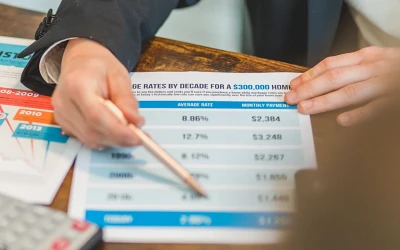
The short version. If you have been told HMDA Plus is coming, the date is wrong by about a decade. It is the industry nickname for the expansion the CFPB proposed in 2014 and finalised on 15 October 2015, and most of it took effect on 1 January 2018. It is not a proposal you need to prepare for. It is the reason your LAR looks the way it does now. That matters more than a correction, because a good deal of the material still circulating about it is written in the future tense. If your process was built after 2018 you inherited the outcome without seeing the transition; if it was built before, some of the workarounds from that first filing season are probably still in it. Either way the useful question is not what HMDA Plus proposed. It is what it did to the workflow, and which of those…
How to Fix the 10 Most Common HMDA Edit Check Errors

Every year thousands of financial institutions rush to meet the March 1 HMDA filing deadline, and every year edit check errors slow them down. These validation failures range from simple data entry mistakes to logic conflicts between fields that need careful analysis to resolve. After helping institutions file HMDA data for nearly four decades we see the same ones appear again and again, and the pattern behind most of them is not carelessness but a mapping between an origination system and the LAR that was defined once and never revisited. Here is how to identify and fix the ten most common HMDA edit check errors before they delay your submission. The article follows two official documents. Every edit number, permitted value and condition comes from the edit specifications in Section 5…
- How to Benchmark Your CRA and HMDA Lending Against Peer Data
- Fair Lending Regression Analysis: What It Controls For and How to Explain a Pricing Disparity
- How to Evaluate Fair Lending and CRA Software: What to Test Before You Sign
- What a Fair Lending Exam Actually Asks For
- Fair Servicing: What Examiners Test in Servicing Data, and How to Test It First
- CFPB and DOJ Settle Redlining Claims Against Non-Depository Mortgage Companies Before Change in Administration
- CFPB, DOJ Order Trident Mortgage Company to Pay More Than $22 Million for Deliberate Discrimination Against Minority Families
- CFPB, DOJ and OCC Take Action Against Trustmark National Bank for Deliberate Discrimination Against Black and Hispanic Families
- Fair Lending Self-Assessment: A Step-by-Step Guide for 2026
- CFPB takes action against Nationstar Mortgage for flawed mortgage loan reporting
- CFPB Takes Action Against Fifth Third Bank for Auto-Lending Discrimination and Illegal Credit Card Practices
- What Actually Counts as a Small Business Loan Under Section 1071
- Section 1071 in 2026: What Lenders Need to Know About Small Business Lending Data

