
Fair Lending
California's New Fair Lending Exam Law: What State-Chartered Banks, Credit Unions and Mortgage Licensees Should Have Ready
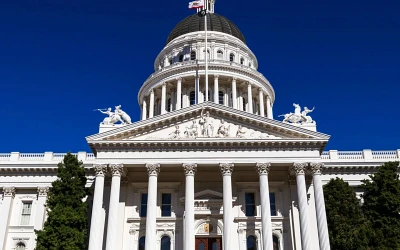
California's Fair Lending Examination Act (AB 801, Chapter 871 of 2026) requires the Department of Financial Protection and Innovation to examine state-chartered banks and credit unions that meet HMDA's loan-volume test, and every residential mortgage lender and servicer licensee, for compliance with federal and California anti-discrimination law in mortgage lending. Banks and credit unions get an exam at least once every four years. Licensees get it inside their existing exam, which must happen at least every 48 months. Governor Newsom approved the bill on September 30, 2026. It is a non-urgency statute with no operative date of its own, so under Article IV, Section 8(c)(1) of the California Constitution it takes effect on January 1, 2027. Everything below is read from the chaptered…
Fair Lending Regression Analysis: What It Controls For and How to Explain a Pricing Disparity

A fair lending regression tests whether a gap in a lending outcome, such as denial or the rate paid, between a prohibited basis group and a control group survives once the credit factors your policy actually uses are held constant. What survives is the part you will be asked to explain, and the model shows which applications drive it. This article covers the working side of that: what goes into the model, how to read what comes out, and how examiners use the result. It is the companion to what regression can and cannot prove in fair lending, which deals with the method's limits in detail, quoting the OCC's handbook. If you have not read that one, the short version is that a model can only account for the factors you give it. What is a fair lending regression actually testing? Two…
How to Evaluate Fair Lending and CRA Software: What to Test Before You Sign

Every fair lending and CRA software evaluation starts the same way: a shortlist of vendors, a run of demos that all look competent, and a decision that has to be defended internally on something firmer than which interface felt nicer. The difficulty is that the differences between these products are mostly invisible in a demo. They show up eighteen months later, in an examination, when someone asks how a number was produced and the honest answer turns out to be that nobody knows. This is a guide to testing for that in advance. It is written from our side of the table — we sell one of these products — so treat the last section as the interested party it is. The first six are the questions we would ask any vendor in this category, including ourselves. What does fair lending…
What a Fair Lending Exam Actually Asks For

A fair lending examination is more predictable than it feels, because the procedure examiners follow is published. The Interagency Fair Lending Examination Procedures set out how scope is decided, what documents get requested, how a focal point is chosen, how files are compared, and what an institution's explanation has to establish to resolve a finding. If you know that sequence, you can assemble most of what will be asked for before it is asked for. This article walks the sequence in order. It is the counterpart to our guide to running a self-assessment, which covers testing yourself. This one covers what happens when someone else does the testing. The document, and which agencies use it The procedures were issued in August 2009 by the OCC, the FDIC, the Federal Reserve Board, the…
Fair Servicing: What Examiners Test in Servicing Data, and How to Test It First
Fair lending examination does not stop at the credit decision. A servicer that grants a forbearance to one borrower and denies it to a similarly situated borrower on a prohibited basis has a fair lending problem, even though no application was declined and nothing about it will ever appear on a HMDA loan application register. The CFPB instructs its examiners to test for precisely this. The data they need to do it does not live in your LAR. This article covers what those servicing decisions are, why origination-side testing cannot see them, and how the statistical methodology used on application data transfers to servicing data. It is also specific about where that methodology stops transferring cleanly, because that is the part most treatments of this topic skip. What fair servicing…
Fair Lending Self-Assessment: A Step-by-Step Guide for 2026

Updated October 20, 2026: new section on the CFPB's 2025 fair lending report. Fair lending compliance is not only about passing your next exam. It is about being able to show that your institution treats every applicant consistently, and being able to show it with evidence you generated yourself rather than evidence an examiner generated for you. A thorough self-assessment identifies potential issues before examiners do, demonstrates proactive risk management, and protects the institution from enforcement actions that begin as findings nobody looked for. This guide walks through a comprehensive fair lending self-assessment using the same methodology regulators use when they examine an institution. The ten steps are in the order an examiner would work through them, which is also the…
CFPB takes action against Nationstar Mortgage for flawed mortgage loan reporting

Bureau's $1.75 Million Civil Penalty for Persistent and Substantial Reporting Errors is the CFPB's Largest Penalty to Date for HMDA Violations WASHINGTON, D.C. — The Consumer Financial Protection Bureau (CFPB) today ordered Nationstar Mortgage LLC to pay a $1.75 million civil penalty for violating the Home Mortgage Disclosure Act (HMDA) by consistently failing to report accurate data about mortgage transactions for 2012 through 2014. Today's action is the largest HMDA civil penalty imposed by the Bureau to date, which stems from Nationstar's market size, the substantial magnitude of its errors, and its history of previous violations. In fact, Nationstar had been on notice since 2011 of HMDA compliance problems. In addition to paying the civil penalty, Nationstar must take the…
CFPB Takes Action Against Fifth Third Bank for Auto-Lending Discrimination and Illegal Credit Card Practices

Company to Pay $18 Million to Minority Auto Borrowers, $3 Million to Credit Card Customers
WASHINGTON, D.C. – Today the Consumer Financial Protection Bureau (CFPB) announced two separate actions against Fifth Third Bank, for discriminatory auto loan pricing and for illegal credit card practices. The joint CFPB and Department of Justice (DOJ) auto-lending enforcement action requires Fifth Third to change its pricing and compensation system to minimize the risks of discrimination, and to pay $18 million to harmed African-American and Hispanic borrowers. The CFPB's action against Fifth Third's deceptive marketing of credit card add-on products requires the bank to provide an estimated $3 million in relief to eligible harmed consumers and pay a $500,000 penalty.
| Institution | Regulator(s) | Violation | Penalty | Period covered | HMDA/fair-lending data field involved |
|---|---|---|---|---|---|
| Fifth Third Bank | CFPB, DOJ | Discriminatory auto loan pricing — violated the Equal Credit Opportunity Act by charging African-American and Hispanic borrowers higher dealer markups than non-Hispanic white borrowers, without regard to creditworthiness | $18 million to harmed African-American and Hispanic borrowers ($12 million into a settlement fund, plus credit of $5–$6 million for remediation already provided, with any additional funds paid in to reach $18 million total); no penalty assessed for this action | January 2010 through September 2015 | Dealer markup on auto loan interest rate (race and national origin) |
| Fifth Third Bank | CFPB | Deceptive marketing and sales of "Debt Protection" credit card add-on product, in violation of the Dodd-Frank Act | $3 million in relief to roughly 24,500 customers, plus a $500,000 penalty to the CFPB civil penalty fund | 2007 through February 2013 (fulfillment kit misrepresentations from December 2011 through September 2012) | — |
Justice Department and Consumer Financial Protection Bureau Reach Settlement with Hudson City Savings Bank to Resolve Allegations of Mortgage Lending

Settlement Provides Over $27 Million to Ensure Equal Lending Services to Predominantly Black and Hispanic Communities
The Justice Department and Consumer Financial Protection Bureau (CFPB) filed a consent order today to resolve allegations that Hudson City Savings Bank (Hudson City) engaged in a pattern or practice of "redlining" predominantly Black and Hispanic neighborhoods in its residential mortgage lending practices. "Redlining" is the discriminatory practice by banks or other financial institutions to deny or avoid providing credit services to a consumer because of the racial demographics of the neighborhood in which the consumer lives. This resolution represents the Justice Department's largest residential mortgage redlining settlement in its history.
| Institution | Regulator(s) | Violation | Penalty | Period covered | HMDA/fair-lending data field involved |
|---|---|---|---|---|---|
| Hudson City Savings Bank | Justice Department; Consumer Financial Protection Bureau (CFPB) | Redlining predominantly Black and Hispanic neighborhoods in residential mortgage lending, in violation of the Fair Housing Act and Equal Credit Opportunity Act (ECOA) | $25 million loan subsidy fund; $2.25 million for advertising, outreach, financial education, and community partnership efforts; two new full-service branches; $5.5 million civil monetary penalty (total over $27 million) | At least 2009 to 2013 | — |
CFPB Orders RPM Mortgage to Pay $19 Million for Steering Consumers Into Costlier Mortgages

RPM CEO Erwin Robert Hirt to Pay Additional $1 Million Civil Penalty
WASHINGTON, D.C. – Today, the Consumer Financial Protection Bureau (CFPB) filed a complaint in federal district court against RPM Mortgage, Inc. and its CEO, Erwin Robert Hirt, for illegally paying bonuses and higher commissions to loan originators to incentivize them to steer consumers into costlier mortgages. The CFPB also filed a proposed order that, if entered by the court, would require RPM to pay $18 million in redress to consumers and a $1 million civil penalty, and would require Hirt to pay an additional $1 million civil penalty.
| Institution | Regulator(s) | Violation | Penalty | Period covered | HMDA/fair-lending data field involved |
|---|---|---|---|---|---|
| RPM Mortgage, Inc. | Consumer Financial Protection Bureau (CFPB) | Violated the Loan Originator Compensation Rule and the Consumer Financial Protection Act (CFPA) by paying bonuses and higher commissions to loan originators to incentivize them to steer consumers into costlier mortgages | $18 million in redress to consumers; $1 million civil penalty (RPM); Hirt to pay an additional $1 million civil penalty | April 2011 through December 2013 | Loan officer compensation / steering |
Justice Department and CFPB Reach Settlement with Provident Funding Associates to Resolve Allegations of Mortgage Lending Discrimination

Settlement Provides $9 Million in Compensation to African-American and Hispanic Borrowers
The Justice Department and Consumer Financial Protection Bureau (Bureau) filed a consent order today to resolve allegations that Provident Funding Associates (Provident) engaged in a pattern or practice of discrimination that increased loan prices for African-American and Hispanic borrowers who obtained residential mortgages between 2006 and 2011 from Provident's nationwide network of mortgage brokers.
| Institution | Regulator(s) | Violation | Penalty | Period covered | HMDA/fair-lending data field involved |
|---|---|---|---|---|---|
| Provident Funding Associates | Justice Department; Consumer Financial Protection Bureau | Pattern or practice of discrimination that increased loan prices for African-American and Hispanic borrowers, in violation of the Fair Housing Act and Equal Credit Opportunity Act (ECOA) | $9 million into a fund for the benefit of victims of the alleged discrimination | 2006 to 2011 | — |
U.S. Justice Department and North Carolina Attorney General Reach Settlement to Resolve Allegations of Auto Lending Discrimination

Settlement Requires Substantial Improvements to Dealerships' Policies and Provides $225,000 in Relief to Affected Customers
The U.S. Department of Justice Civil Rights Division, the U.S. Attorney's Office for the Western District of North Carolina and the North Carolina Department of Justice today announced a settlement of the federal government's first-ever discrimination lawsuit involving "buy here, pay here" auto lending. The settlement, which is subject to court approval, was filed today in the U.S. District Court for the Western District of North Carolina.
| Institution | Regulator(s) | Violation | Penalty | Period covered | HMDA/fair-lending data field involved |
|---|---|---|---|---|---|
| Auto Fare Inc. and Southeastern Auto Corp. | U.S. Department of Justice Civil Rights Division; U.S. Attorney's Office for the Western District of North Carolina; North Carolina Department of Justice | Pattern or practice of "reverse redlining" by intentionally targeting African-American customers for unfair and predatory credit practices in financing used car purchases, in violation of the federal Equal Credit Opportunity Act; also alleged violation of North Carolina's Unfair and Deceptive Trade Practices Act | $225,000 settlement fund to compensate victims of past discriminatory and predatory lending | — | Disproportionately high sales prices, down payments, and interest rates compared to other subprime used-car dealers |
Justice Department Reaches Settlement Agreement With First United Bank Over Allegations of Discrimination on the Basis of National Origin

The Justice Department announced today that First United Bank, of Dimmitt, Texas, will maintain uniform pricing policies, conduct employee training and pay $140,000 as part of a settlement to resolve allegations that it engaged in a pattern or practice of discrimination on the basis of national origin.
| Institution | Regulator(s) | Violation | Penalty | Period covered | HMDA/fair-lending data field involved |
|---|---|---|---|---|---|
| First United Bank | Justice Department (Civil Rights Division); referred by the FDIC | Pattern or practice of discrimination on the basis of national origin — charging higher prices on unsecured consumer loans made to Hispanic borrowers, in violation of the Equal Credit Opportunity Act (ECOA) | $140,000 total, to compensate hundreds of victims of discrimination | — | National origin discrimination in loan pricing (unsecured consumer loans) |
The settlement, which is subject to court approval, was filed in conjunction with the Justice Department's complaint in the U.S. District Court for the Northern District of Texas. The complaint alleges that First United Bank charged higher prices on unsecured consumer loans made to Hispanic borrowers in violation of the Equal Credit Opportunity Act (ECOA).
CFPB Takes Action Against Franklin Loan Corporation for Steering Consumers into Costlier Mortgages

WASHINGTON, D.C. — Today, the Consumer Financial Protection Bureau (CFPB) ordered a California mortgage lender, Franklin Loan Corporation, to pay $730,000 for giving its employees illegal bonuses for steering consumers into loans with higher interest rates. The Bureau has asked a federal district court to approve a consent order requiring the company to end its illegal compensation system and refund the consumers it harmed.
| Institution | Regulator(s) | Violation | Penalty | Period covered | HMDA/fair-lending data field involved |
|---|---|---|---|---|---|
| Franklin Loan Corporation | Consumer Financial Protection Bureau (CFPB) | Paid loan officers bonuses tied to the interest rates of loans they closed, violating the Federal Reserve Board's Loan Originator Compensation Rule | $730,000 in redress to affected consumers (no civil penalty sought, based on Franklin's financial condition and the Bureau's desire to maximize relief to consumers) | June 2011 to October 2013 | Loan officer compensation / steering (interest rate-based bonuses) |
CFPB and DOJ Take Action Against National City Bank for Discriminatory Mortgage Pricing

WASHINGTON, D.C. — Today, the Consumer Financial Protection Bureau (CFPB) and the Department of Justice (DOJ) filed a joint complaint against National City Bank for charging higher prices on mortgage loans to African-American and Hispanic borrowers than similarly creditworthy white borrowers between the years 2002 and 2008. The agencies also filed a proposed order to settle the complaint that requires National City Bank, through its successor PNC Bank, to pay $35 million in restitution to harmed African-American and Hispanic borrowers.
| Institution | Regulator(s) | Violation | Penalty | Period covered | HMDA/fair-lending data field involved |
|---|---|---|---|---|---|
| National City Bank | CFPB and DOJ | Charging higher mortgage prices to African-American and Hispanic borrowers than similarly creditworthy white borrowers, in violation of the ECOA (and, per DOJ, the Fair Housing Act) | $35 million to a settlement fund for restitution to harmed African-American and Hispanic borrowers | 2002–2008 | Discretionary pricing and compensation policies (loan officer/broker discretion over rates and fees) |
Justice Department and Consumer Financial Protection Bureau Reach $98 Million Settlement to Resolve Allegations of Auto Lending Discrimination by Ally
Settlement Is Department's Third Largest Fair Lending Agreement Ever and Largest Ever Auto Lending Agreement The Department of Justice and the Consumer Financial Protection Bureau (CFPB) today announced the federal government's largest auto loan discrimination settlement in history to resolve allegations that Detroit-based Ally Financial Inc. and Ally Bank have engaged in an ongoing nationwide pattern or practice of discrimination against African-American, Hispanic and Asian/Pacific Islander borrowers in their auto lending since April 1, 2011. The agreement is the first joint fair lending enforcement action by the department and CFPB. With this agreement, eight of the top 10 largest fair lending settlements in the department's history have been under Attorney General Eric…
Justice Department Reaches Settlement with Fort Davis State Bank to Resolve Allegations of Lending Discrimination

The Justice Department announced today that Fort Davis State Bank, based in Fort Davis, Texas, will implement uniform pricing policies, conduct employee training and pay $159,000 as part of a settlement to resolve allegations that it engaged in a pattern or practice of discrimination on the basis of national origin. Facts from the Justice Department's settlement with Fort Davis State Bank, as cited in this article. InstitutionRegulator(s)ViolationPenaltyPeriod coveredHMDA/fair-lending data field involved Fort Davis State BankJustice Department (Civil Rights Division); referred by the FDICEqual Credit Opportunity Act (ECOA) — pattern or practice of pricing discrimination on the basis of national origin, charging higher prices for unsecured consumer loans to Hispanic…
- How to Benchmark Your CRA and HMDA Lending Against Peer Data
- HMDA vs CRA vs Section 1071: What Each Rule Collects and Who Has to File
- 2026 HMDA Data: Your Filing Checklist for the March 1, 2027 Deadline
- HMDA Plus: What It Actually Changed in the LAR Workflow
- What Actually Counts as a Small Business Loan Under Section 1071
- How to Fix the 10 Most Common HMDA Edit Check Errors
- CFPB and DOJ Settle Redlining Claims Against Non-Depository Mortgage Companies Before Change in Administration
- CFPB, DOJ Order Trident Mortgage Company to Pay More Than $22 Million for Deliberate Discrimination Against Minority Families

