
2019 Modified LAR Data Release and Improved Peer-2-Peer in Comply
As many of you may have noticed, the 2019 Modified LAR data was released by the CFPB/FFIEC on March 31st. While this information is useful for analyzing individual institution data, there is no transmittal information to help select your peer groups. If you know the name and LEI of one of your peers that you would like to analyze, you can download the individual data and load to a reporting entity in Comply. We have an Import definition that should help you with this.
The National Aggregate Dataset is the data we use to populate the Peer-2-Peer system with all of the reporters' data. This data includes the necessary respondent information in addition to the LAR data itself. We have attempted in the past to utilize this early release of the data, but what we found was that the data may not be complete in all cases, or had other data integrity issues that were corrected when the National Aggregate Dataset was released. For these reasons, we are opting to wait until the corrected National Aggregate Dataset is released before we format the data for customer use, to negate any erroneous analysis.
Peer-2-Peer Reports in Comply 19.1
We are excited to announce that in the upcoming release of Comply 19.1, the Peer-2-Peer functionality will be migrated from the peer website into the Comply software directly. While the Peer-2-Peer website has provided reliable analysis of peer data for many years, it was built on a deprecated platform and has become difficult to maintain and add new functionality to. So, in order to accommodate the 2018 changes and add new functionality and reports, the best course of action was to sunset the Peer-2-Peer site and replicate the most commonly-used reports into the Comply software directly. The integration of Peer-2-Peer into Comply will allow for future expansion of the product and eliminate the need for users to do peer analysis outside of the Comply system. In addition, having the functionality inside of Comply allows more flexibility and makes it easier for a user already accustomed with using Comply to perform quicker analysis. This will also allow people to use the more robust peer group wizards and definitions for multiple purposes.
We are anticipating the release of Comply 19.1 no later than the second week in May which should coincide with the release of the National Aggregate HMDA peer data. The CRA Peer functionality will also be moved to Comply but that data is not anticipated until the Fall of this year.
Below you can see a streamlined walk-through of the new Peer-2-Peer report creation process:
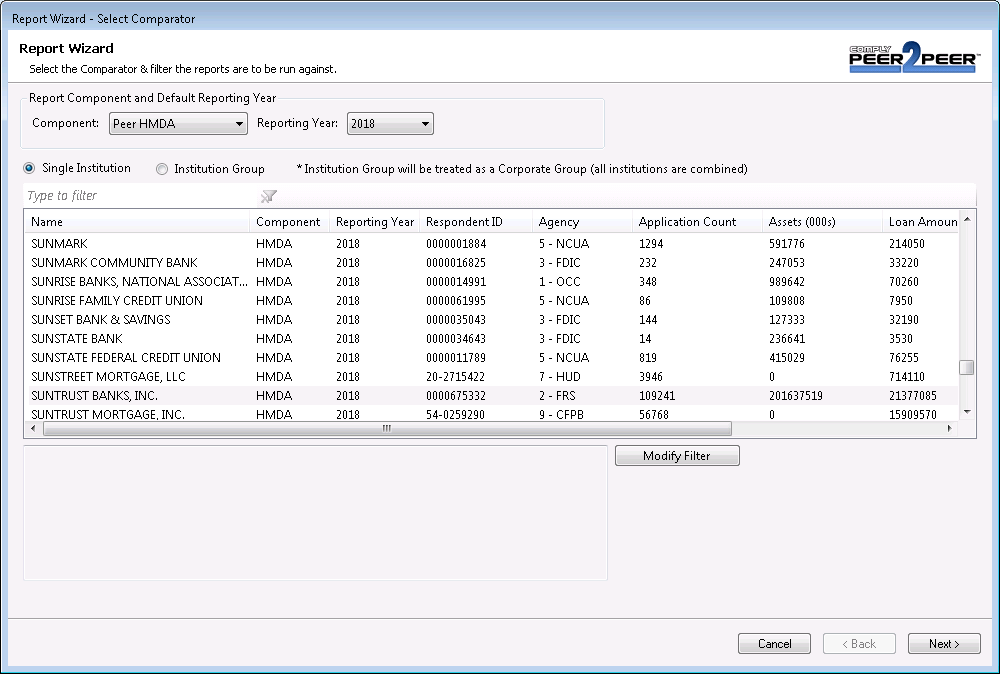
On this screen you select the Comparator you would like to use, you can select a single institution or a Peer Institution Group which will be used as a "corporate" group meaning all institutions will be treated as a single institution.
If you would like to apply a filter on the data, you can use the Comply Filter Designer by clicking the Modify Filter button to create a specific filter on the data.
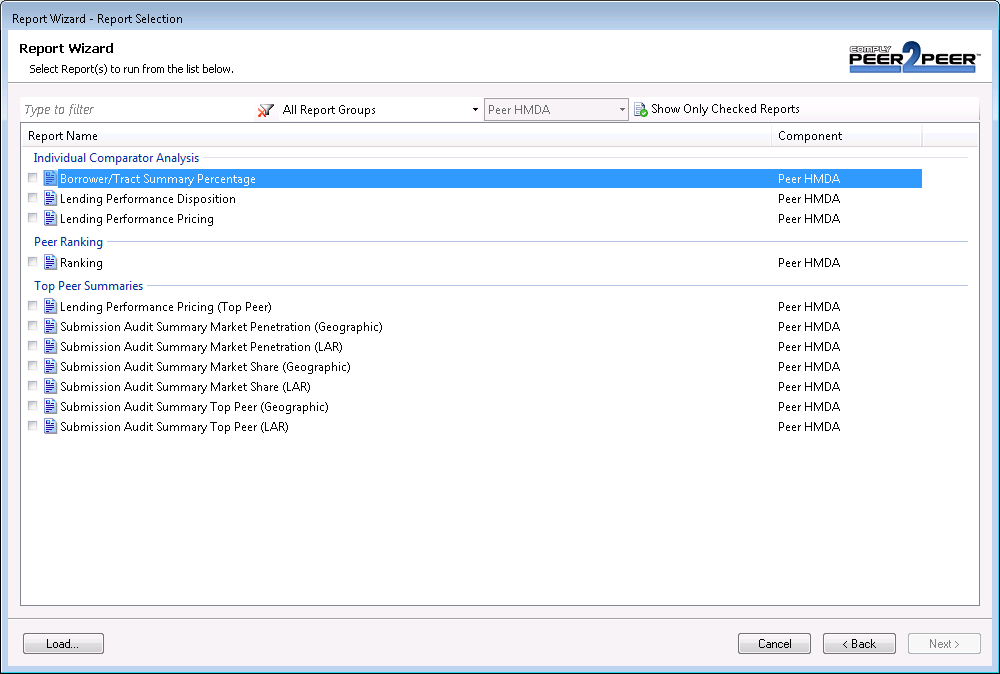
This screen allows you to select from the list of reports available, more reports will be added in the future, at present these are the reports that have been used most often historically on the Peer-2-Peer website.
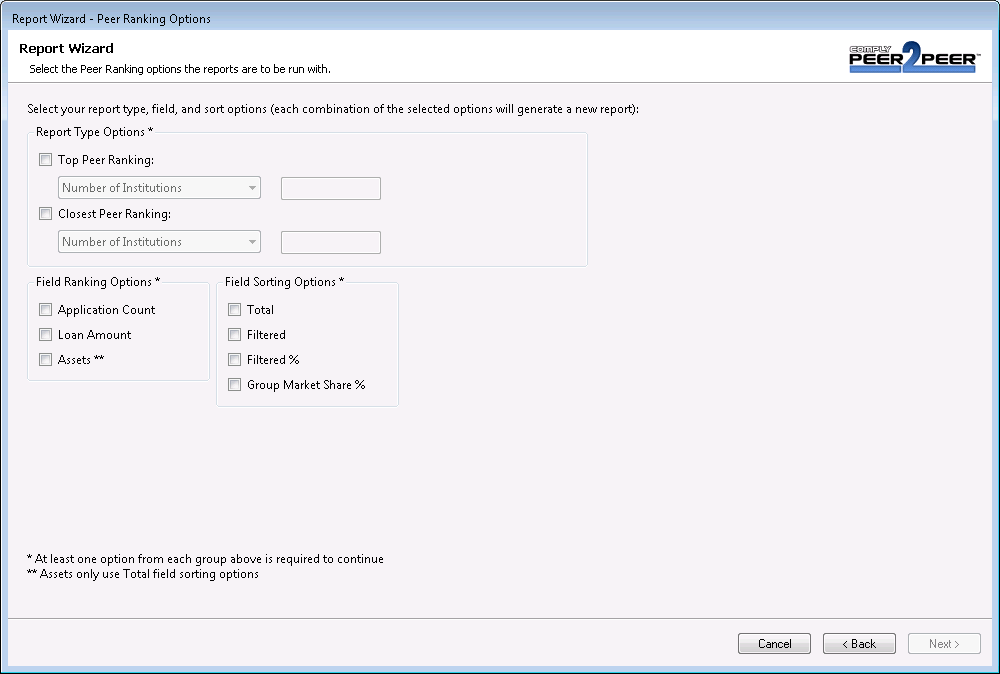
This screen allows you to select the options that pertain to how the data will be presented on the selected reports. For example how many institutions to include for top or closest peers, how to rank the peers (by total app count, total loan amount or institution assets) and finally sorting of results (by total or filter count, filter percent or group market share percentage).

This screen gives more in depth filtering options, filtering to only peers in a Peer Institution Group, by the agency peers report to, by other lender code, city or state and by minimum or maximums of percent of high priced loans and assets amount or assets amount percent.
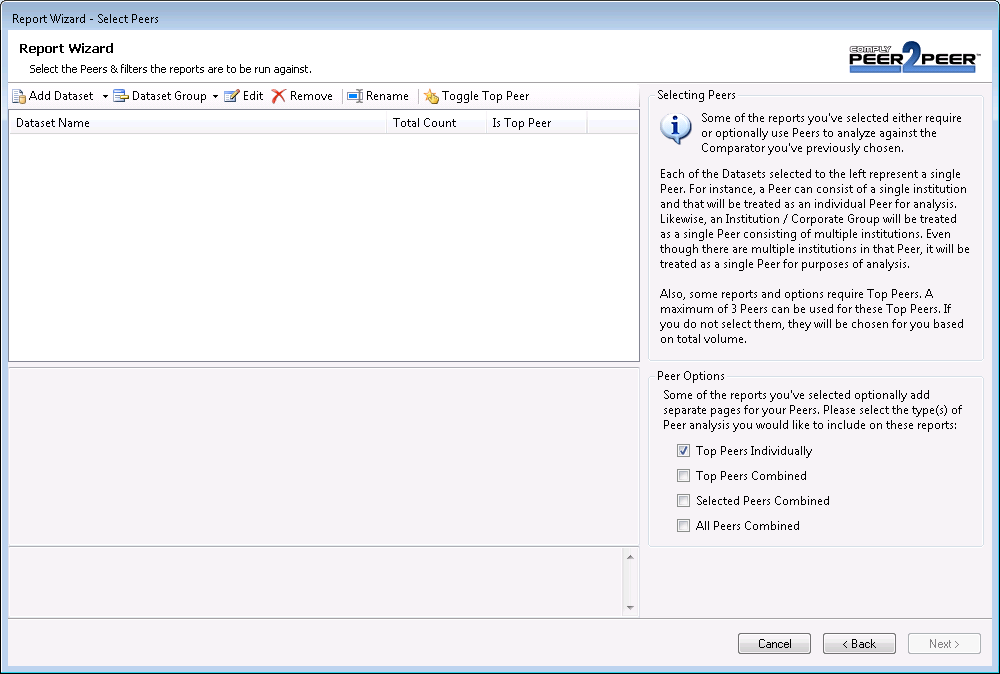
Finally you select your peer institutions or Peer Institution Groups to use. If you select Peer Institution Groups you have the option of breaking out the individual peers or using the group as a single institution in the reports. Some reports also provide separate pages for each institution which can be presented as simply the top peers, a combination of the top peers, selected peers or a combination of all peers.
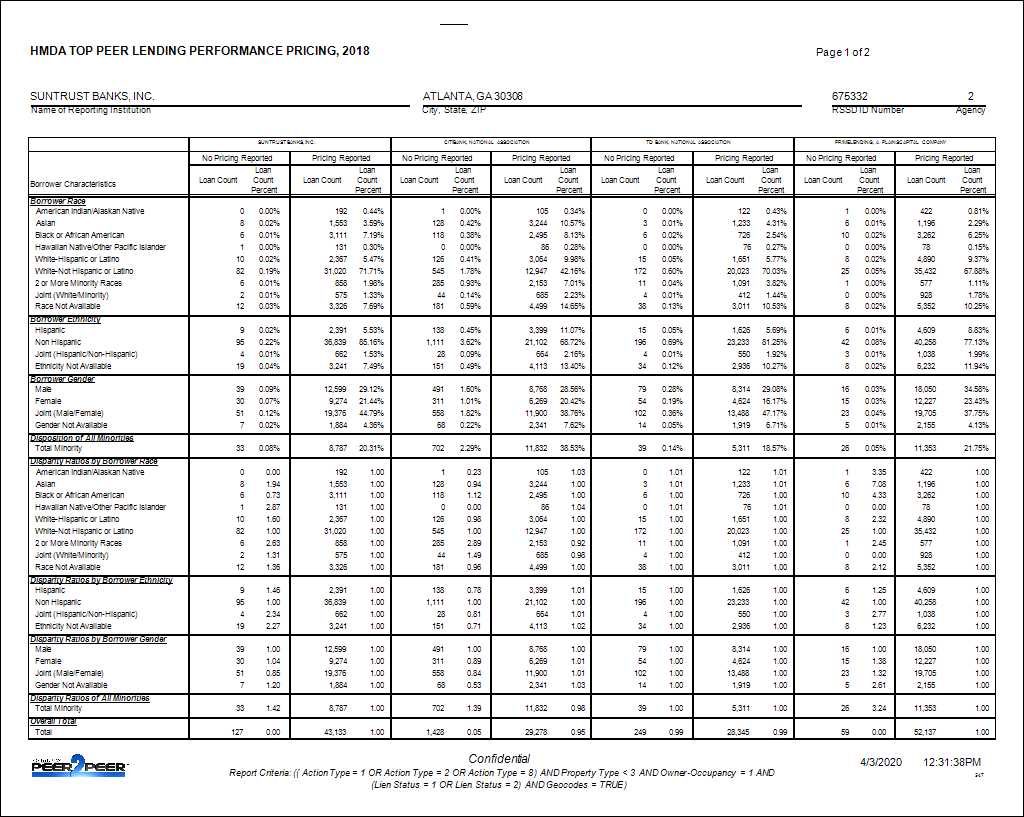
An example of a migrated report, the Top Peer Pricing report, is illustrated below:

- California's New Fair Lending Exam Law: What State-Chartered Banks, Credit Unions and Mortgage Licensees Should Have Ready
- How to Benchmark Your CRA and HMDA Lending Against Peer Data
- HMDA vs CRA vs Section 1071: What Each Rule Collects and Who Has to File
- Fair Lending Regression Analysis: What It Controls For and How to Explain a Pricing Disparity
- 2026 HMDA Data: Your Filing Checklist for the March 1, 2027 Deadline
- 2018 Edits Finally Released by CFPB
- 2018 HMDA Changes - What's the Word?
- RATA's Customer Care Campaign
- HMDA Plus: What It Actually Changed in the LAR Workflow
- How to Fix the 10 Most Common HMDA Edit Check Errors
- CFPB and DOJ Settle Redlining Claims Against Non-Depository Mortgage Companies Before Change in Administration
- How to Evaluate Fair Lending and CRA Software: What to Test Before You Sign
- What a Fair Lending Exam Actually Asks For
- Fair Servicing: What Examiners Test in Servicing Data, and How to Test It First
- What Actually Counts as a Small Business Loan Under Section 1071
- Section 1071 in 2026: What Lenders Need to Know About Small Business Lending Data

