
White Papers & Reports
How to Benchmark Your CRA and HMDA Lending Against Peer Data
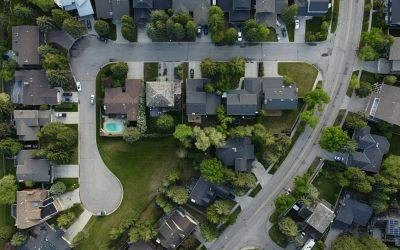
To benchmark CRA and HMDA lending against peers, pick a group of lenders that compete in the same markets with a similar size and product mix, pull their public HMDA and CRA data for the same year and the same geography, and compare market share, lending by tract income level, denial rates and pricing. The comparison only holds up if the peer group does. Your own numbers mean little on their own. Say you hold a 6% share of home purchase originations in moderate-income tracts. That could be strong or weak, and nobody can tell which until it sits next to what lenders like you did in the same tracts in the same year. Examiners make that comparison as a matter of course, so it makes sense to make it first. This guide covers where the data comes from, how to build a peer group that will…
How to Evaluate Fair Lending and CRA Software: What to Test Before You Sign

Every fair lending and CRA software evaluation starts the same way: a shortlist of vendors, a run of demos that all look competent, and a decision that has to be defended internally on something firmer than which interface felt nicer. The difficulty is that the differences between these products are mostly invisible in a demo. They show up eighteen months later, in an examination, when someone asks how a number was produced and the honest answer turns out to be that nobody knows. This is a guide to testing for that in advance. It is written from our side of the table — we sell one of these products — so treat the last section as the interested party it is. The first six are the questions we would ask any vendor in this category, including ourselves. What does fair lending…
Special Report: Geocoding - Achieving the Highest Accuracy

Although geocoding is only one part of the examination accuracy testing, it is substantially different from the other submittable data that is tested. The geocode is probably the most important data element because of its demographic impact. There is no such thing as 100% accuracy for geocodes on a complete LAR due to the complexities and subtleties of the subject, but there is at least one proven solution that can achieve greater than 98% accuracy. This document contains statistical and anecdotal evidence describing how to achieve the highest precision level possible to help avoid a time-consuming resubmission process or a costly penalty. See the geocoding engine behind these accuracy figures. If you want to check a hard-to-place address yourself before it becomes a resubmission problem,…
- 2025 Community Reinvestment Act (CRA) Small Business, Small Farm and Community Development Lending Data: What Changed and What to Do Next
- The CFPB's Semiannual Report: What Narrower Federal Enforcement Means for Fair Lending, HMDA and Community Reinvestment Act (CRA) Programs
- How to Choose Section 1071 Software: What to Test Before Your First Filing
- The Regulation B Lawsuits: What Your Fair Lending Program Should Keep Doing While the Rule Is in Court
- California's New Fair Lending Exam Law: What State-Chartered Banks, Credit Unions and Mortgage Licensees Should Have Ready
- November 2026
- October 2026
- September 2026
- August 2026
- March 2026
- February 2026
- January 2026
- 2025
- 2022
- 2021
- 2020
- 2017
- HMDA vs CRA vs Section 1071: What Each Rule Collects and Who Has to File
- 2026 HMDA Data: Your Filing Checklist for the March 1, 2027 Deadline
- HMDA Plus: What It Actually Changed in the LAR Workflow
- Fair Lending Regression Analysis: What It Controls For and How to Explain a Pricing Disparity
- What a Fair Lending Exam Actually Asks For
- Fair Servicing: What Examiners Test in Servicing Data, and How to Test It First
- What Actually Counts as a Small Business Loan Under Section 1071
- Section 1071 in 2026: What Lenders Need to Know About Small Business Lending Data

